
St Peter's CofE Primary and Nursery School Gringley-on-the-Hill
Useful / interesting information
Below you will find a varied range of information related to several different subject areas which we think you might find useful.
NHS Pharmacy First Service
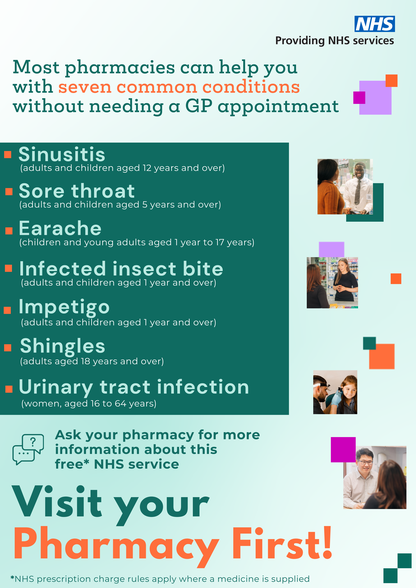
Did you know that the NHS Pharmacy First Service enables children and adults to get convenient access to healthcare advice and treatment where appropriate, for seven common conditions without the potential delay of having to wait for a GP appointment? Accessing the service may mean that can help children feel better and back to school as quickly as possible, as well as supporting parents/carers to also get better if they are unwell with one of the conditions covered under the service.
There is no need to make an appointment; parents or carers can pop into their local Boots pharmacy with their child and ask for help under the service.
Support for the following conditions can be accessed under the service, free of charge (unless NHS prescription charges apply):
|
Common condition |
Patient eligibility |
|
Earache |
1 to 17 years |
|
Impetigo |
1 year and over |
|
Infected insect bites and stings |
1 year and over |
|
Sore throats |
5 years and over |
|
Sinusitis |
12 years and over |
|
Uncomplicated urinary tract |
Women 16 to 64 years |
|
Shingles |
18 years and over |
Yours sincerely,
Yvonne Reeson
*NHS Pharmacy First Service: In pharmacies in England only. Subject to availability. Treatment is subject to suitability assessment. Normal NHS prescription charge rules apply.
Help from the Pharmacy
-
Is my child well enough to go to school?
Please follow the link below to find professional advice about childhood illnesses and conditions, and whether these might prevent your child from going to school.
Ofcom Data Reveals 1 in 3 Children Aged 5 -7 Use Social Media Unsupervised
Compared to a year ago, a higher proportion of young people aged 5-7 now engage in messaging, voice chat, and video calls, as well as live-streamed content. Social media platforms have also seen an increase in engagement with the data demonstrating a significant uptick in social media usage among 5-7 year-olds, with platforms like WhatsApp, TikTok, Instagram, and Discord showing notable growth.
Factors in school that have a 'Positive, Negative or No Impact At All' on Learning
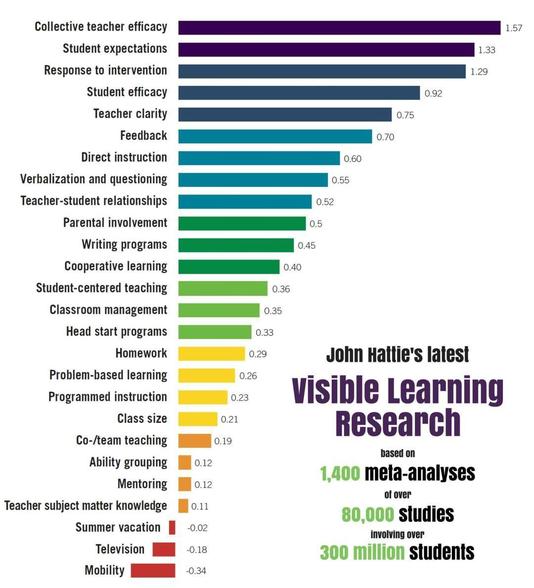
Certain factors have a positive impact on a child's learning; some factors have a negative impact, and some factors have virtually no impact at all.
Please take a look at the chart below that was produced by John Hattie.
Professor John Hattie is a researcher in education. His research interests include performance indicators, models of measurement and evaluation of teaching and learning. John Hattie became known to a wider public with his two books Visible Learning and Visible Learning for teachers. Visible Learning is a synthesis of more than 800 meta-studies covering more than 80 million students. According to John Hattie Visible Learning is the result of 15 years of research about what works best for learning in schools. The Times Educational Supplement once called him “possibly the world’s most influential education academic”.
I hope you find this information useful. I personally think it is intriguing and surprising in equal measure!
Visible Learning by John Hattie
Do you have a 2 year old?
Is so, please read on...
From 2 January 2024, eligible working parents can apply for 15 hours of childcare for their two-year-old. Parents have until 31 March 2024 to apply for a code, with mid-January to the end of February being the optimum time to apply in case they need to provide further information to support their application.
To apply for a childcare code each parent needs to be working and earning the equivalent of 16 hours a week at national minimum/living wage and under £100,000 adjusted net income per year. This means that each parent needs to earn from just over £8,600 per year to be eligible for 15 hours a week of childcare during term time.
There is more information on the childcare support available to parents on the Childcare Choices website, where they can explore the early education entitlements and other government help with childcare costs.
Playtime snacks
At the risk of having to go through every biscuit, cereal and granola bar, crackers and generic snacks known to man, I would like to offer some guidance on desirable playtime snacks.
Foods need to be low in sugar and low in fats. For example, rice cakes and certain biscuits are fine - ginger nuts, party rings, malted milk and rich tea (3 max). I've been on Google - can you tell?
The same rule applies to breakfast and cereal bars - if they're low in sugar and fat, then they're fine to bring to school. However, please check the labels. Many bars are low in fat but VERY high in sugar; Nature Valley bars have 11.3 grams of sugar in whereas Alpen Light Cherry Bakewell bars are low in fat and sugar.
Mini Cheddars contain 7.3 grams of fat in a 25 gram bag.
Basically, I would just ask that people are sensible about what they send into school. I have a duty to insist on healthy eating but the snack choice of a significant number of children has become decidedly unhealthy and I am not willing to turn a blind eye.
I would like to thank you in anticipation of your support in this matter. I am not trying to be mean, I am trying to ensure that the children are snacking on foods that are not detrimental to their health. I am sure you would agree that this is not an unreasonable thing to do.
Yvonne Reeson
Head teacher
What are the 5 symptoms of chickenpox?
What are the signs and symptoms of chickenpox?
- Fever.
- Feeling tired.
- Headache.
- A stomachache that lasts for one or two days.
- A skin rash that is very itchy and looks like many small blisters.
- Bumps filled with a liquid that looks like milky water.
- Scabs after the blisters break.
- Skin that looks blotchy.
What do Beginning chicken pox look like?
The rash begins as many small red bumps that look like pimples or insect bites. They appear in waves over 2 to 4 days, then develop into thin-walled blisters filled with fluid. The blister walls break, leaving open sores, which finally crust over to become dry, brown scabs.
A detailed description of chicken pox
An itchy, spotty rash is the main symptom of chickenpox. It can be anywhere on the body
Chickenpox happens in 3 stages. But new spots can appear while others are becoming blisters or forming a scab.
Stage 1: small spots appear:
The spots can:
be anywhere on the body, including inside the mouth and around the genitals, which can be painful
spread or stay in a small area
be red, pink, darker or the same colour as surrounding skin, depending on your skin tone
be harder to see on brown and black skin
Stage 2: the spots become blisters:
The spots fill with fluid and become blisters. The blisters are very itchy and may burst.
Stage 3: the blisters become scabs:
The spots form a scab. Some scabs are flaky while others leak fluid.
Other symptoms:
Before or after the rash appears, you might also get:
a high temperature
aches and pains, and generally feeling unwell
loss of appetite
Chickenpox is very itchy and can make children feel miserable, even if they do not have lots of spots.
Increase in Acute Hepatitis cases in children
UKHSA is working with the NHS and public health colleagues across the UK to investigate the potential cause of an unusually high number of acute hepatitis ‘liver inflammation’ cases being seen in children from England, Scotland and Wales in the past few weeks. There is no known association with travel, and hepatitis viruses (A to E) have not been detected in these children.
In England, there have been 49 confirmed cases with most cases being in 2 to 5 year olds.
Based on reports from the specialist units, no child has died. The underlying cause of this increase in presentation since early 2022 currently remains unknown. There is no evidence to suggest this is linked to the COVID-19 vaccine.
One of a number of potential causes under investigation is that a group of viruses called adenoviruses may be causing the illnesses. Adenoviruses are commonly passed from person to person and by touching contaminated surfaces, as well as through the respiratory route. The most effective way to minimise the spread of adenoviruses is to practice good hand and respiratory hygiene and supervise thorough handwashing in younger children.
We are raising awareness amongst professionals, and we are asking parents to be particularly vigilant to children presenting with signs and symptoms potentially attributable to hepatitis that may require testing and to contact a healthcare professional if they have concerns.
Symptoms of hepatitis
Short-term (acute) hepatitis often has no noticeable symptoms, so you may not realise you have it.
If symptoms do develop, they can include:
- muscle and joint pain
- a high temperature
- feeling and being sick
- feeling unusually tired all the time
- a general sense of feeling unwell
- loss of appetite
- tummy pain
- dark urine
- pale, grey-coloured poo
- itchy skin
- yellowing of the eyes and skin (jaundice)
See your GP if you have any persistent or troublesome symptoms that you think could be caused by hepatitis.
-
60 second Safeguarding briefing: 'Yubo' and 'Poppy Playtime
'Get information about the safety, or otherwise, of these apps
PANTS resources to help keep your child safe
The PANTS Activity Pack makes it easy to talk to your child about staying safe. With a word search, dot-to-dot and maze game, you can help them learn without using any scary words. Each pack includes: stickers a bookmark pant-tastic activities a parents' guide
Reading Plus login
readingplus.com
Site code: rpstpet13
login is child's first name with the first letter a capital followed by the first letter of their last name as a capital e.g MickeyM
Password is qwerty
Top Tips for Supporting Your Child's Mental Health
Dear parents and carers,
Please don't think I'm trying to teach Grandma how to suck eggs; this article could well be reaffirming that you're doing the right thing during these challenging times. I've no doubt that everyone is trying their best.
Maintaining good mental health is just as important as having a healthy body. It affects the way children think, feel and act. As a parent, you play an important role in promoting your child's mental health and recognising when there may be early signs of difficulties.
But how can you promote good mental health?
Put simply, you can do this by:
- being aware of the things you say and how you speak to your child;
- clear and positive actions;
- and
- through the environment you create at home;
So, here are our 10 top tips on practical ways you can positively promote your child’s mental health:
1. Connect with your child everyday.
Try to have make time every day for an activity where you can connect with your child without distractions that enables comfortable conversation. We all lead busy lives, but doing an activity like this together will offer your child the opportunity for them to feel secure and express how they are doing / feeling;
2. Have quiet time together.
This is a great way to connect with your child and takes no planning! Uninterrupted quiet time provides an ideal environment for your child to focus and build their attention span. When things are overwhelming, quiet time can help your child reset their thoughts and avoid behaviour escalation to meltdowns;
3. Praise your child when they do well.
Recognise their efforts as well as achievements- praise the small steps. For example, say your child has difficulty sitting quietly and calmly at the dinner table. Although desired, it would be unrealistic to initially expect them to do this for half an hour. So small steps might be praising that they achieved 5 -10 minutes. At the next meal this could be built on by reminding them of their previous achievement and setting a new goal of 15 minutes;
4. Foster your child’s self-esteem.
Self-esteem is how they feel about themselves, both inside and out. Children with good self-esteem generally have a positive outlook, accept themselves and feel confident. Fostering self-esteem includes showing love and acceptance, asking questions about their activities / interests and helping them to set realistic goals;
5. Actively listen to your child.
That’s really listening to what they are saying and how they are feeling. Often the way children feel may seem unrealistic or disproportionate to adults but remember, children do not have the wisdom of experience and they may need help and direction to make sense of situations and feelings. Try to answer your child's questions and reassure them in an age-appropriate manner. Whilst you may not be able to answer all their questions, talking things through can help them feel calmer;
6. Wherever possible stick to commitments and routines.
Following through on commitments and routines builds trust and continuity, important relationship factors. Try to keep to as many regular routines as possible to help your child feel safe and secure. This includes having regular times for going to bed, waking up, eating meals and doing activities /hobbies;
7. Keep your promises.
Should the need to break a commitment or routine occur make sure there is a valid reason and take the time to explain why to your child. Remember success comes from keeping your promises to your child;
8. Find opportunities to play together.
Play is a fantastic way for children to learn new things and develop problem solving skills. It also offers great opportunities for them to learn how to express their feelings;
9. Be a positive role model.
Look after your own mental health and wellbeing. Children are intuitive and will readily pick up on feelings such as stress, anxiety, hopelessness and fear.
10. Help your child to develop a language of feelings.
Teaching children about feelings can be hard as it’s an abstract concept but if they can understand and express their emotions, they will be less likely to ‘act out’. For example, you can discuss how characters in a book are feeling and the reasons why they may be feeling that way;
We hope you find these tips helpful. It is important to recognise and accept that sometimes your child may not feel comfortable talking to you. As a parent this is a tough one, but the reality is that there will be occasions where this is the case. Rather than feel resentful or unhappy, you can take positive action and help them find someone they feel comfortable talking to e.g., a grandparent, an older sibling or another positive adult role model. Above all else, if you have any concerns, no matter how minor, or are at all worried about your child’s behaviour, mental health or wellbeing please contact your GP. In the first instance they may offer a face-to-face appointment or may ask you to speak to them via phone or video call. GPs are experienced professionals trained to help and you shouldn’t worry about wasting their time.
I hope you found the article useful.